Claim Your Free Estimate Today
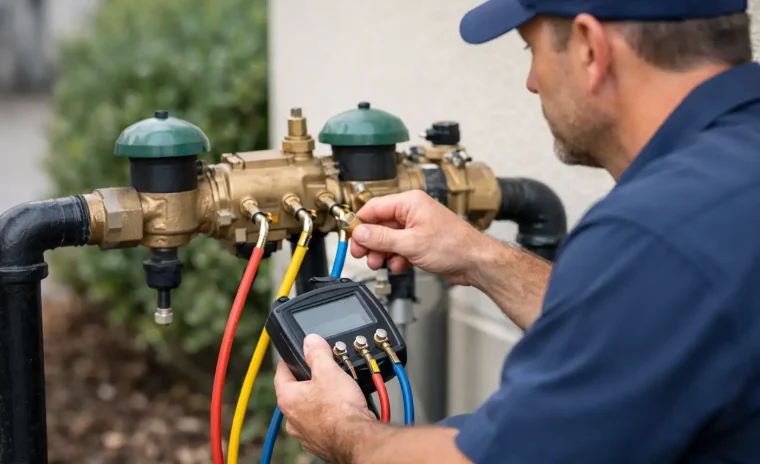
A failed backflow test can put more than a compliance deadline at risk. It can interrupt water service, create avoidable repair costs, and leave a business exposed to contamination concerns. Understanding backflow test requirements for businesses helps facility managers, landlords, and owners protect their water supply before a notice, failed inspection, or shutdown forces the issue.
Backflow prevention is not optional where a property has a potential cross-connection between its plumbing system and the public water supply. The exact requirements vary by water provider, property use, and the type of backflow assembly installed. That is why a dependable testing plan starts with knowing what is on your property, why it is there, and when it must be tested.
What Backflow Is and Why Businesses Must Control It
Backflow occurs when water flows in the wrong direction through a plumbing system. Instead of clean water moving from the public supply into the building, pressure changes can pull or push water from the property back toward the public line.
This can happen during a water main break, a fire hydrant event, high demand on the public system, or a pressure drop inside the building. If the building has irrigation chemicals, cleaning solutions, commercial equipment, boiler water, food-service connections, or other non-potable water sources, that reverse flow can introduce contaminants into the drinking water supply.
A backflow preventer is the mechanical barrier designed to stop that reversal. It needs testing because it has moving internal parts. Check valves can wear out, debris can prevent a proper seal, and relief valves can fail. A device may look fine from the outside while no longer providing the protection it was installed to provide.
Backflow Test Requirements for Businesses: What Usually Applies
Most commercial properties must have their backflow prevention assemblies tested at installation, after repair or relocation, and on a recurring schedule established by the local water authority. Annual testing is common, but it should never be treated as a universal rule for every device and every property.
In Tucson and throughout Southern Arizona, the public water provider or local jurisdiction typically determines whether an assembly is required, the approved device type, the testing frequency, and how test results must be submitted. A business may also have additional obligations under fire protection, irrigation, health, or building requirements.
The property owner is generally responsible for maintaining the assembly and completing testing on time. Leasing a commercial space does not automatically remove that responsibility. A lease may assign the work to a tenant, property manager, or owner, but the water provider will often look to the account holder or property owner when notices go unanswered.
Businesses commonly required to have backflow protection
Requirements are based on the degree of hazard and the potential for a cross-connection, not simply the size of the business. Restaurants, medical and dental offices, apartment communities, manufacturing facilities, car washes, hotels, schools, retail centers, and properties with irrigation systems often require protection.
Other common triggers include fire sprinkler systems, commercial boilers, cooling equipment, chemical dispensing, commercial kitchens, mop sinks, laboratories, swimming pools, and dedicated irrigation meters. Even a small office building may need a backflow assembly if its plumbing configuration creates a risk to the public supply.
If you recently added irrigation, remodeled a tenant space, installed new equipment, or changed the use of a building, the existing device may no longer match the property’s needs. That calls for an evaluation, not just another routine test.
Who Can Perform a Commercial Backflow Test?
A backflow test should be completed by a tester recognized by the applicable water provider or jurisdiction. The tester uses calibrated gauges to check whether the assembly’s internal components hold pressure and operate correctly. After testing, results are documented and submitted according to the provider’s process.
A general plumbing visit is not automatically the same as a certified backflow test. Likewise, passing a visual inspection does not prove the device is functioning properly. Businesses should confirm that the tester is qualified to test the specific assembly and can provide the required paperwork.
For multi-property owners and facility managers, recordkeeping matters. Keep the test report, repair documentation, installation information, and notices from the water provider in one accessible file. This makes renewal dates easier to track and provides a clear history if a device fails or a compliance question arises.
What Happens if a Backflow Device Fails?
A failed test does not always mean the entire assembly must be replaced. In many cases, the problem is a worn check valve, damaged rubber component, fouled internal part, or relief valve issue that can be repaired. The right solution depends on the device condition, its age, the availability of repair parts, and the water provider’s requirements.
A qualified plumbing team should explain the failure clearly: which test reading failed, what component caused the issue, whether repair is practical, and what the replacement option would cost. This is where clear options matter. Replacing a repairable assembly wastes money, while repeatedly repairing an obsolete or heavily corroded device can create more downtime later.
After a repair, the assembly must normally be retested. Do not assume a repair alone closes the compliance issue. The final passing report is what shows the device is operating correctly.
How to Avoid Missed Deadlines and Business Disruption
The easiest approach is to treat backflow testing as scheduled property maintenance rather than an emergency repair. Put the testing month on the facility calendar well before the due date, especially if your property has multiple assemblies or requires access to locked mechanical rooms, roofs, or exterior enclosures.
Before the appointment, make sure the tester can safely reach the device. Clear stored materials, trim vegetation around exterior assemblies, unlock gates, and notify on-site staff if the device is in a restricted area. These small details can prevent a missed appointment and a second service call.
It also helps to inspect the enclosure periodically. A backflow assembly can be damaged by vehicle impact, freezing temperatures, vandalism, corrosion, or irrigation leaks. In Southern Arizona, exterior devices also face intense sun exposure and occasional hard freezes. A broken enclosure or leaking valve deserves attention before the annual test date arrives.
For businesses with kitchens, medical equipment, irrigation, or fire systems, coordinate plumbing work carefully. Shutting down water without a plan can affect customers, tenants, sanitation procedures, and daily operations. An experienced commercial plumber can schedule testing and repairs to reduce interruption while still completing the work correctly.
When to Call for an Evaluation Instead of Only a Test
Routine testing is appropriate when the assembly is accessible, in good condition, and already documented with the water provider. An evaluation is the better first step when you are unsure whether a device exists, received a notice for an unfamiliar assembly, bought a property with incomplete records, or are planning a renovation.
You should also request an evaluation if there is water leaking from the backflow preventer, visible corrosion, recurring test failures, a damaged enclosure, or unexplained changes to water pressure. These conditions can point to a larger plumbing issue that a simple pass-or-fail appointment will not solve.
Acclaimed Drain And Plumbing Solutions LLC provides clear explanations of commercial backflow testing, needed repairs, and practical next steps for Southern Arizona properties. The goal is not to create unnecessary work. It is to confirm that the device protecting your water supply is working as intended and that your documentation is ready when it is needed.
A backflow deadline is easier to manage when the device, records, and responsible contact are all in order. Schedule testing before the notice becomes urgent, and address small device problems while there is still time to choose the right repair.